
Super intelligence coaching
SI Judo Video Analysis: Training Review
Explore si judo video analysis through training video review. SI means super intelligence here. mmaGPT currently uses AI to turn a clip into technique notes and practice drills.
SI Judo Video Analysis for your next session
Judo video analysis can lose the most important evidence when a recording starts at the throw. Grip changes, movement, and off-balancing happen earlier. SI judo video analysis focuses on keeping those steps attached to the entry. Film a short supervised sequence with both athletes visible and explain the intended technique. Ask your instructor whether the setup placed the partner where the throw needed them. That question is more useful than adding force to a repetition whose preparation remains unclear.
Film supervised uchi-komi, nage-komi, or a short randori exchange with both athletes visible. Keep the gripping phase and the steps before the entry. Tell your instructor which throw you intended. Treat pressure and hidden grips as details that film may not resolve. Ask the coach to confirm the suggested correction before repeating throws, and keep breakfalls and partner safety under direct supervision.
Start with the evidence. A useful review should let you replay the noted moment and decide whether the observation fits. Bring the question to your instructor before turning it into a training change.
Super intelligence judo coaching: evidence first
Super intelligence is a broader idea than the video analysis available here. mmaGPT does not claim demonstrated artificial superintelligence or guaranteed coaching accuracy. Its current job is to review footage using AI and return structured feedback. The page name does not change how the service works.
A good training note should separate what the camera shows from what remains uncertain. Angle, lighting, speed, and overlapping bodies all affect the evidence. A confident sentence cannot recover a foot outside the frame or a grip hidden behind a partner. Use the original recording to check each observation.
A seoi-nage entry
Review the off-balancing and foot placement before the turn. If the partner remains upright, ask whether the setup needs work before adding depth or force to the entry.
Write the observation in plain language before choosing a correction. Name the moment, the position, and the movement you can see. If you cannot verify the note, ask your instructor rather than rehearsing a change based on an assumption. This keeps the review useful even when a clip has limits.
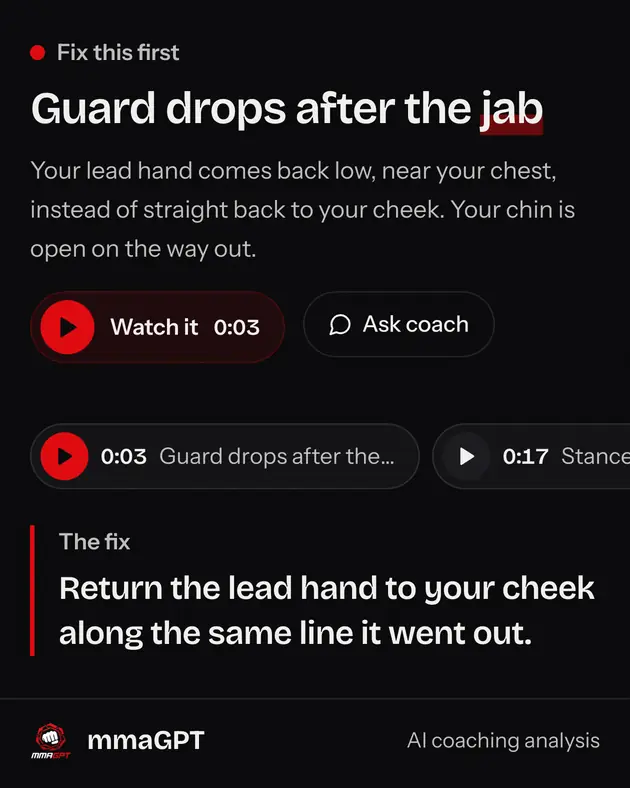
Judo video feedback into practice
- Film a familiar exercise. Use a short clip that shows the beginning, technique, and reset. Keep the camera stable and the relevant athletes visible. Explain what you intended to practice so your coach can interpret the result against that goal.
- Check the timestamp. Read the note alongside the original footage. Ask whether the body position or decision described is actually visible. Separate a repeated habit from a single awkward rep. Keep uncertain observations as questions for class.
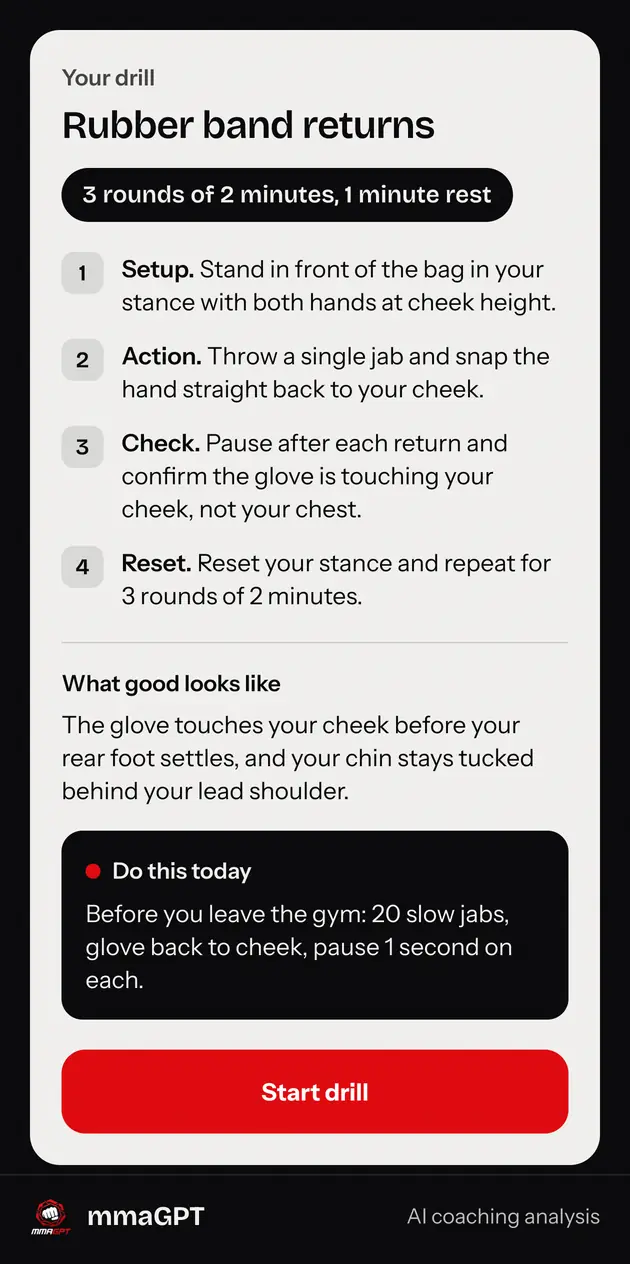
- Agree one correction. Discuss the note with your instructor and choose a manageable cue. Practice it in the setting your coach recommends. Do not add force or resistance just to test a report. Record another attempt when the movement and filming conditions are comparable.
Keep the comparison simple: the same exercise, the same angle, and the same question. A cleaner recording is not automatically better technique. Your instructor can judge whether the correction holds up when the pace or partner response changes. The app gives you material for that discussion, not a final verdict on your ability.
Coaches, context and the cost of a review
Use mmaGPT as homework between classes. A coach in the room can adjust the exercise, observe pressure, and explain what your recording leaves out. Software cannot supervise a throw, manage sparring intensity, or provide your corner during a fight. The useful partnership is a recorded question followed by informed human coaching.
Your first analysis is free, no card needed. After that, plans start at $9 a month. $9/month for 3 analyses, $19/month for 8, $29/month for 16, and $49/month for 45. Pay yearly and every plan gets 2 months free, so Pro works out to US$24.17 a month.
No download needed. mmaGPT runs in your phone's browser on iPhone and Android, and you can add it to your home screen like an app. A native app is in development. The SI terminology does not create a different app or billing plan. Before purchasing more reviews, check whether the first report helped you identify a visible issue and prepare a better question for your next session.
mmaGPT analysis plans and pricing explain the current options. For the established terminology, visit the original judo AI training page. Use the Judo technique and review guide to prepare a focused instructor question.
SI Judo Video Analysis: common questions
- SI Judo Video Analysis uses SI to mean super intelligence. mmaGPT currently provides AI review, without claiming demonstrated artificial superintelligence. This page focuses on a practical example: Review the off-balancing and foot placement before the turn. If the partner remains upright, ask whether the setup needs work before adding depth or force to the entry. Use the evidence to prepare a question for your instructor.
- Record a short exercise you already practice, keeping the setup and recovery in the frame. Show the full body and the partner when relevant. Provide your discipline and skill level. For this page, the review focus is kuzushi, gripping and throw-to-ground transitions. Ask your instructor to confirm the note before changing how you train.
- SI Judo Video Analysis describes the existing mmaGPT service, with no separate model or extra allowance. New accounts can try one full analysis without a card. Use that report to inspect kuzushi, gripping and throw-to-ground transitions. Check the observation with your instructor before choosing another review or a paid plan.
Choose your next training review
Choose a discipline, film a familiar exercise, and bring one clear question to your instructor. Start with a report you can check.